About This Vessel
This 2007 Sabre Spirit, measures 36 ft, and is located in Seattle, Washington, powered by Volvo D1-30 30.00HP.
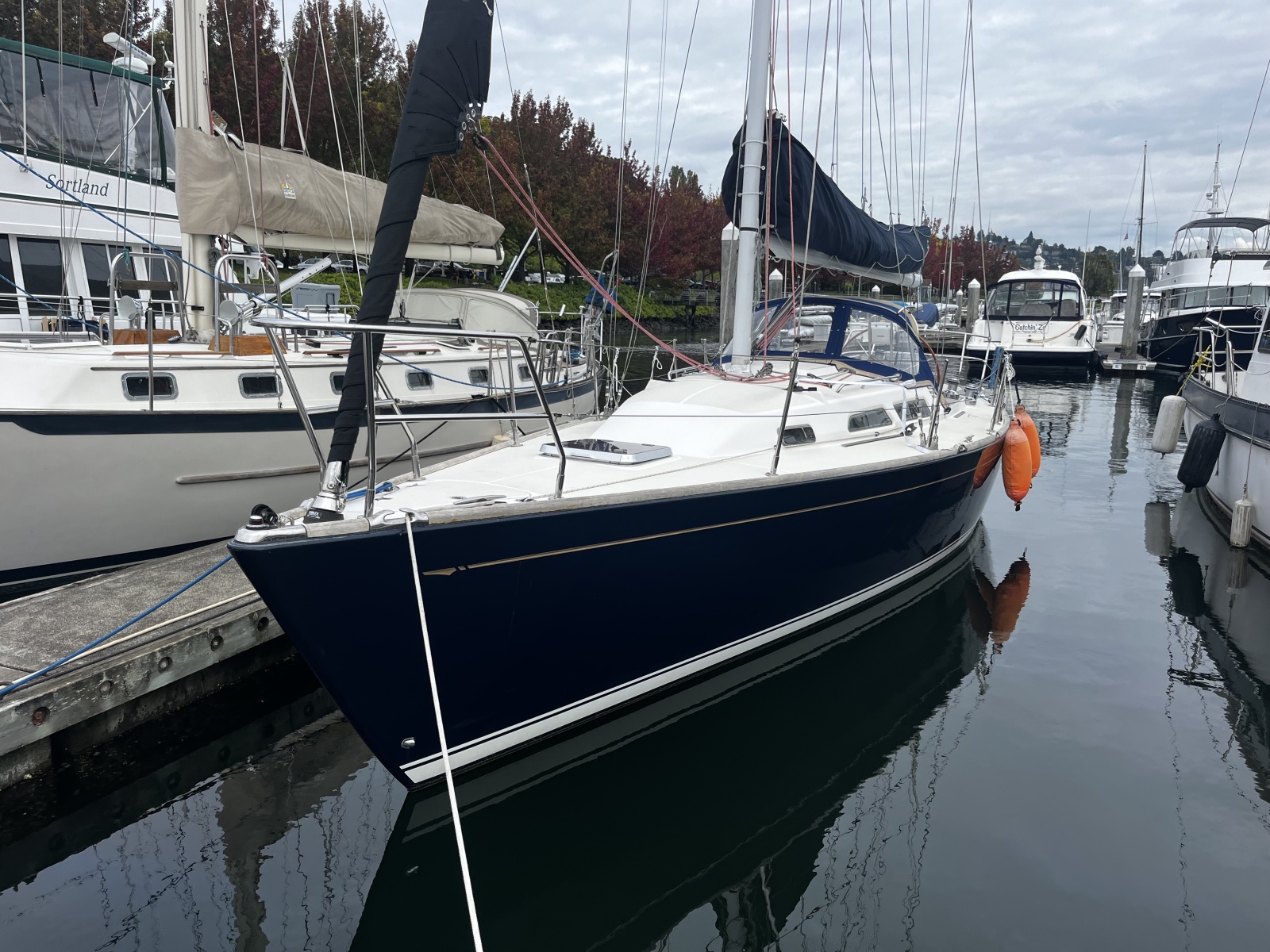
LEARNING TO FLY is a beautifully equipped Sabre Spirit 36, combining the traditional character and craftsmanship of a classic New England daysailer with a thoughtful selection of modern sailing systems. Her dark blue hull, teak cap rail, carbon-fiber rig, and satin-finished American cherry interior give her a distinctive and timeless character. The long cockpit is exceptionally comfortable for daysailing with family and friends, while the self-tacking jib, electric primary winch, low-friction mainsail track, and well-organized deck layout make her remarkably easy to sail. With her attractive proportions, high-quality construction, and unusually comprehensive equipment list, Learning to Fly is a particularly appealing example of the Spirit 36. It is offered as a convenience by this broker/dealer to its clients and is
Interior Accomodations
The interior of LEARNING TO FLY is finished in beautifully maintained American cherry with a satin finish, complemented by a teak and holly cabin sole and carefully crafted traditional joinery. The layout is simple and inviting, with straight settees to port and starboard surrounding a beautifully built drop-leaf table with maple inlay. The forward V-berth is generously proportioned, with outboard shelving, storage drawers below, opening stainless-steel ports, and a forward hatch providing natural light and ventilation. Ocean Air screens and shades, Ocean Frigast stainless reading lamps, and Hella ventilation fans add comfort throughout.A compact navigation station is positioned at the forward end of the port settee, with a lifting-top chart table, integrated VHF, electrical distribution panel, and convenient AC and DC outlets. To starboard is additional built-in storage and the Fusion stereo.The galley is located immediately to port at the companionway and is well equipped for daysailing and coastal cruising, with Corian countertops, a top-loading ice box, stainless-steel sink, pressure hot and cold water, and manual fresh and raw water pumps. A Force 10 two-burner propane stove and oven is complemented by louvered storage lockers and dedicated propane safety equipment.Opposite the galley is the head, featuring an electric-flush Jabsco toilet, Corian vanity, stainless-steel sink, storage, and a retractable shower wand that allows the space to serve as an integral shower. Overall, the interior combines the warmth and character of traditional yacht joinery with the practical systems and amenities expected aboard a modern coastal cruiser.Corian countertopsTop-loading ice boxStainless-steel sinkForce 10 two-burner propane stove and ovenPressure hot and cold waterManual fresh-water pumpManual raw-water pumpHella ventilation fanXintex S-1A propane fume detector and solenoid controlPropane locker sized for two tanks; one tank currently fittedJabsco electric-flush marine toiletTankWatch holding-tank level monitorCustom V-berth mattress (2020)
Electronics and Navigation
Garmin chartplotter at helm (2021)Two Garmin multifunction displays, inset in aft end of cabin trunk (2021)Garmin autopilot (2021)VHF radio with RAM microphoneFusion MS-RA70 stereoTwo interior stereo speakers
Electrical Systems
12V DC / 120V AC electrical systemBlue Sea Systems AC/DC distribution panel with DC ammeter, DC voltmeter, AC voltmeterMarinco 30A shore power inlet50' shore power cord12V outlet at navigation and 120V outlet at navigation stationAdditional 120V AC outlets throughoutOne Intimidator 8A31DTM AGM starting batteryTwo Intimidator 8A31DTM AGM house batteriesictron BMV-712 Smart battery monitorProMariner ProSafe 1 monitor
Mechanical Systems
Volvo Penta D1-30B diesel engineNew raw water pump in 2026, new exhaust elbow and manifold in 2024Groco raw-water strainerRacor primary fuel filter with R20T elementShurflo water pressure pumpSeaward 6-gallon water heaterJabsco shower drain pumpElectric bilge pumpManual cockpit bilge pumpRule high water alarm
Deck and Hull
LEARNING TO FLY presents a particularly attractive profile, with a dark blue-painted hull accented by a gold cove stripe and double white boot stripe. A teak cap rail surrounds the deck, complementing the stainless-steel bow pulpit, stern pushpit, and double lifelines. Six stainless-steel mooring cleats are each paired with individual stainless-steel chocks integrated into the teak rail. Boarding gates to port and starboard provide convenient access from a dock or tender.The foredeck is clean and purposeful, with a recessed headsail furler, deck-access anchor locker, and a dedicated pad eye and block for tacking an asymmetric spinnaker. The cockpit is one of the boat's particularly appealing features—long, open, and comfortably arranged for six to eight people, with an aft mainsheet traveler that keeps the cockpit clear and traveler controls conveniently positioned for the helm. An Edson stainless destroyer wheel with varnished teak rim sits at the center of the cockpit, complemented by teak wheel cup holders, a teak cockpit table, generous cushions, and an Iversen's Designs dodger with handrails.The rig combines performance-oriented equipment with a clean, traditional appearance. The white-painted carbon-fiber two-spreader mast and aluminum boom are paired with continuous solid-rod standing rigging, a Hall Spars rigid boom vang, Dyneema lazy jacks, and a low-friction mainsail track. The self-tacking jib and well-organized sail handling make Learning to Fly particularly straightforward to sail, while the substantial winch inventory and masthead spinnaker halyard provide additional versatility when desired.Below deck, substantial cockpit lazarette storage and an additional aft locker provide useful space for cruising and deck gear. Four fleece-covered fenders, additional fenders, dock lines, and dedicated covers for the dodger and steering station are included.Dark blue painted hullGold cove stripeDouble white boot stripeTeak cap rail/toe railSix stainless-steel mooring cleatsIndividual stainless-steel chocks integrated into teak railStainless-steel bow pulpit and stern pushpitDouble stainless-steel lifelines with port and starboard boarding gatesDeck-access anchor lockerTwo large lazarette lockers beneath port and starboard cockpit seatsAdditional aft/stern lockerCockpit cushionsTeak cockpit tableCockpit hot and cold showerTeak washboardsIversen's Designs dodger with handrailsCanvas window covers for dodgerCanvas steering wheel and binnacle coverEdson stainless-steel destroyer wheel with varnished teak rimTeak wheel cup holder
Sails and Rigging
Carbon-fiber two-spreader mast, painted whiteAluminum boom, painted whiteHall Spars rigid boom vangContinuous solid-rod standing riggingLow-friction mainsail trackDyneema lazy jacksQuantum stack pack mainsail coverSelf-tacking jib with 2:1 sheetingMasthead spinnaker halyard, mainsail halyard, jib halyardFlag halyard at starboard spreaderFour Lewmar 46 self-tailing stainless-steel winchesOne Lewmar 34 self-tailing stainless-steel winchOne Lewmar 44 electric self-tailing stainless-steel winchSails: Quantum Fusion M M6 mainsail (2025)Quantum Fusion M M6 95% self tacking jib (2025)Quantum assymetrical spinnaker with dousing sock (2024)Quantum Code 0 (2025)
Miscellaneous and Safety
Four fenders with fleece coversAssorted additional fendersAssorted dock lines
Cruising World Magazine Review 2008
The Oxford English Dictionary defines a yacht as “a light, fast-sailing ship . . . used for pleasure excursions.” The Sabre Spirit is a yacht. I found this boat not only easily handled and fast but also a sheer delight to sail; no wonder it won the Judges’ Choice Award in Cruising World’s 2008 Boat of the Year contest.Jim Taylor-the designer of Sabres for the last 15 years-had noticed that most sailors in Marblehead, Massachusetts, would go out in the morning and return in the afternoon. He approached Sabre with the idea of producing a daysailer for those sailors. Sabre came back with the idea that it should be, instead, a “weekender.” When consulted, Sabre dealers suggested that the boat should have standing headroom below, which influenced the amount of freeboard and the height of the house, which in turn influenced the overall length needed for the boat to still look lovely on the water. And look lovely it does, with a low, sleek house, a nice spring to the sheer, and an ever-so-slightly spooned stem that complements its traditional transom perfectly. Taylor modestly attributes the boat’s DNA to Sabre founder and former chief designer Roger Hewson, who insisted that his boats first be lively, fast, and stylish. Furniture was then fitted to the hull shape, rather than the reverse, as is often found on modern cruisers.Sabre built the boat I sailed with a one-piece E-glass hull, cored with Divinycell and coated with isophthalic gelcoat for blister resistance. The builder now uses Airex foam in the layup. Carbon-fiber stringers add to longitudinal stiffness. The deck is also cored with Divinycell and is bonded to the hull with 3M 5200 and through-bolted with stainless-steel fasteners. The lead keel is connected with stainless-steel bolts to a reinforced sump, and the balanced spade rudder is fiberglass bonded to a carbon stock.Right after the first two boats were launched in the summer of 2007, the builder hosted an informal regatta in Marblehead for magazine editors. After several races upwind and down in winds that ranged from 5 knots to 12, I had a pretty good feel for the boat. The full-battened main was hung on an Antal track on a tall, carbon-fiber rig with double swept spreaders by Hall Spars, and it provided plenty of power to get the boat through the light slop, even though it sports only a self-tacking fractional jib-set on a Furlex furler that’s recessed below deck level in the anchor locker.Helm feedback was excellent, and the boat stayed beautifully balanced as it heeled when the breeze was up, never demanding more than a couple of fingers on the 4-foot-diameter, teak-rimmed Edson wheel to keep it on track. The wheel’s size allows the helmsman to perch comfortably port or starboard on the teak-topped coaming with a good view of the jib. The traveler is aft of the cockpit, with controls just forward of the helmsman on both sides, next to the winches for the double-ended mainsheet. In the 10-foot-long cockpit are 6-foot seats, and the coamings outside them are high, with comfortable backrests. Large cubbyholes provide ample stowage for sheet tails. The seat lockers and a lazarette provide tons of storage. Halyards, jib sheet, and sail controls are led though Spinlock clutches to a winch on either side of the companionway.Forward, the deck is uncluttered. Navtec rod rigging leads to outboard chainplates, worthwhile stainless-steel handrails sit on the house, and the jib leads to an athwartships track forward of the mast. Optional teak toerails gleam with varnish, and fold-down mooring cleats fore and aft stow sleekly; the midship cleats are fixed. Pulpits and stanchions fit into sockets and are removable, demonstrating how committed the builder is to aesthetics on the Spirit.Below, a teak-and-holly sole contrasts with satin-varnished cherry woodwork. The view forward to the anchor locker bulkhead is almost uninterrupted, making the interior seem bigger than it really is. It’s well lit and ventilated by three opening Lewmar hatches, a pair of stainless-steel opening ports, and four large fixed ports. To starboard of the companionway is a white-gelcoated head and shower with standing headroom and a Quiet Flush electric toilet. To port, the galley features a Force 10 two-burner propane stove and oven, an icebox, and a smallish sink.The companionway steps lift for access to the 27-horsepower Volvo that’s connected to a saildrive for quiet operation. Settee berths on either side form a cozy social area in the saloon, with shelves outboard, handrails above, and a centerline drop-leaf table in between. At the forward end of the port berth is a small nav desk. Taylor says that since most boats will be sailed in waters well-known to their skippers, he saw no need to put the nav station near the companionway; boats ranging farther afield, he says, will be equipped with an on-deck chart plotter. The half bulkhead forward of the nav table makes a convenient place to wedge a pillow for reading in the 7-foot-long V-berth. Opposite the nav table is a small hanging locker, with drawers underneath. The cabin house extends forward of the mast, which makes getting into the V-berth easier and-with an opening hatch in the middle-eliminates any closed-in feeling.The boat performs its function so perfectly that after a day of sailing outside Marblehead’s harbor and loathe to start the engine, I sailed through the crowded mooring field, tacking this nimble little yacht with a flick of the wrist while the crew and designer did nothing but enjoy a chat. We sailed up to the dock, dropping the main as we coasted to a stop behind the boat’s sister ship-exactly the kind of thing Taylor had in mind when he first drew the lines for the Sabre Spirit.